









What is Cushing's disease?
Cushing's disease, also known as Cushing's syndrome, is a chronic endocrine disorder. It is caused by a hormonal imbalance and generally affects horses over 15 years of age.
Located at the base of the brain, the hypothalamus and pituitary are the two glands responsible for this clinical syndrome. In a healthy horse, the hypothalamus regulates the secretion of hormones produced by the pituitary gland.
Cushing's disease results from degeneration of the hypothalamus, which can no longer fulfill its regulatory role. The pituitary gland begins to develop, producing abnormal amounts of thehormone ACTH.
The latter stimulates the adrenal glands, which secrete cortisol (stress hormone), responsible for the clinical signs visible in horses. However, it is possible to alleviate these disturbances with natural treatments.
Symptoms of Cushing's syndrome in horses
Cushing's disease can be difficult to spot in its early stages, since it can be mistaken for the classic signs of aging. There are, however, certain signs that should alert horse owners.
Dermatological signs
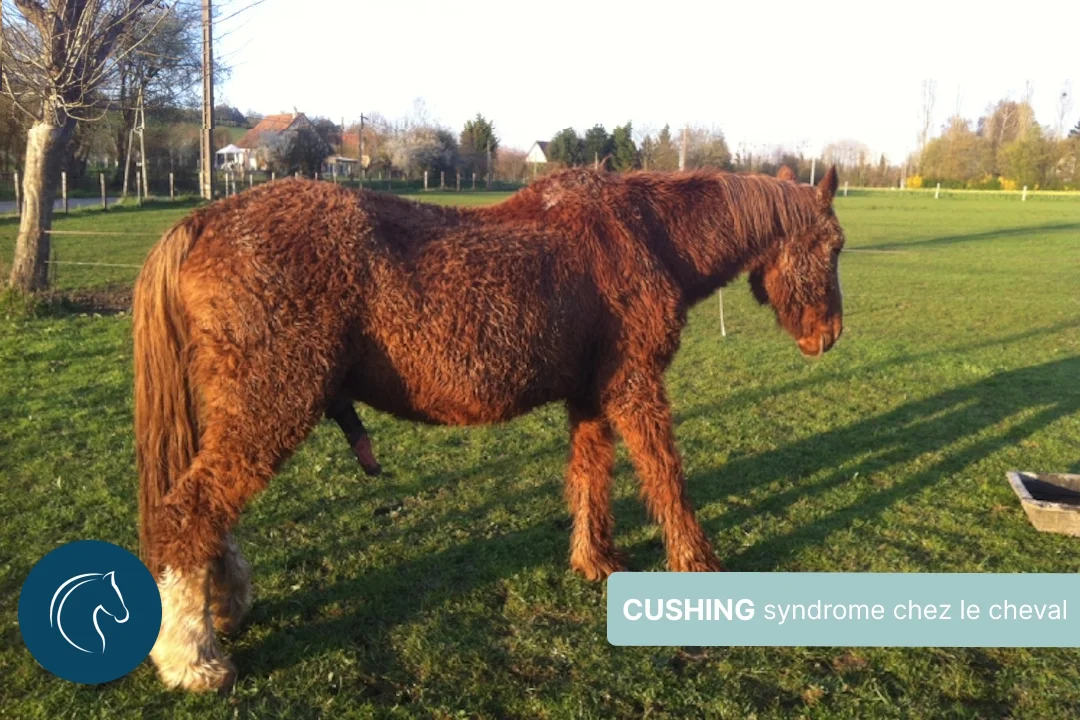
The first characteristic sign of Cushing's disease in equines is hirsutism. This is excessive hair growth on all or part of the body.
The coat is abnormally long and curly, whatever the season. However, not all horses with Cushing's disease systematically show this symptom, and vice versa.
Horses can also show resistance to moulting. It may be incomplete or come late.
Locomotor disorders
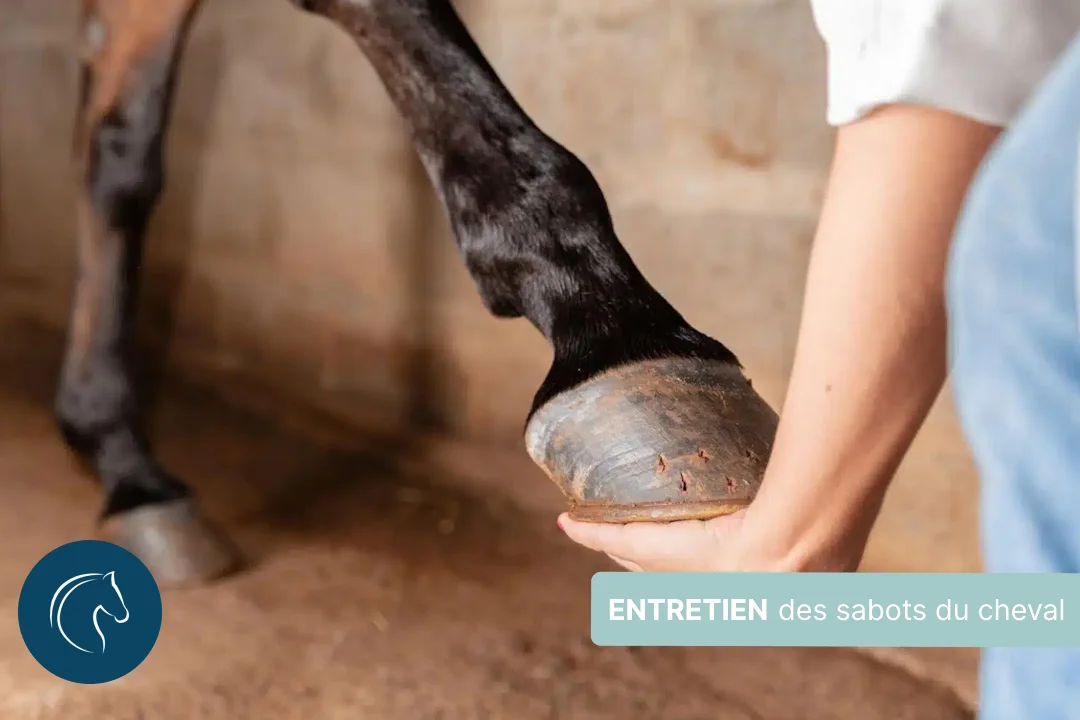
Among the disorders characteristic of Cushing's syndrome, the horse may present episodes of laminitis, i.e. severe and very painful inflammation of the foot. The risk of laminitis affects around 1/3 of horses suffering from the disease.
In severe cases, the third phalanx may collapse and perforate the hoof, leading to lifelong locomotor problems.
Episodes of laminitis can be acute or chronic. Acute laminitis appears suddenly, causing inflammation and pain in the foot. Chronic laminitis, on the other hand, sets in over time if left untreated during the acute phase.
Lower immunity
Cushing's disease also leads to greater susceptibility to dental, sinus, respiratory and urinary pathologies.
The animal may then develop polyuro-polydipsic syndrome, which translates into increased urinary volume. The horse urinates in very large quantities and compensates for this loss by drinking a lot of water.
Wound healing also becomes slower as the horse's immunity declines. Excessive sweating (hyperhydrosis), especially of the elbows and stifles, is also not uncommon.
Body dysfunction
In addition to all the symptoms listed above, Cushing's disease can have an impact on a horse's gait. In particular, progressive muscle wasting can be observed, leading to abnormal fat distribution.
They are most visible on the neck, base of the tail and abdomen, giving the dog a recognizable pendulous appearance.
Finally, rarer symptoms such as neurological disorders may appear. For example, loss of vision, sudden onset of sleep and even loss of balance.
Diagnosing Cushing's disease in horses
If Cushing's disease is suspected, blood tests can be used to establish a diagnosis. To date, the most reliable clinical test consists in analyzing blood levels of the corticotropic hormone (ACTH) secreted in excess by the pituitary gland in diseased horses.
However, results must take into account the time of year, since ACTH levels are normally highest from August to October. It is therefore preferable to perform the test at this time of year.
Other criteria, such as the horse's state of stress and geographical location, should also be taken into account. In the event of doubtful results, additional analyses can be carried out.
Dexamethasone suppression test: involves measuring the horse's cortisol level. Dexamethasone is a synthetic hormone which acts like cortisol. The injection is made in the evening, with a blood sample taken the following morning to compare pre- and post-injection cortisol values. If the horse has the disease, there will be no drop in the hormone.
TRH stimulation test: if doubts persist after the previous tests, TRH is injected. This molecule acts on the pituitary gland before measuring ACTH. Affected horses will show an increase in ACTH levels.
Treating Cushing's syndrome in horses
It's vital not to underestimate the disease, as it could have serious consequences for the horse's life.
Above all, regular veterinary check-ups are essential to keep a close eye on your pet's health.
Drug-based treatments
One drug treatment is pergolide. This molecule will help control the evolution of the disease and even contribute to its regression.
Similar in action to dopamine, pergolide acts on the pituitary gland, reducing the secretion of ACTH and hence cortisol. However, this treatment has side effects such as colic and diarrhea.
The second trilostane-based treatment does not act on ACTH, but directly on cortisol production in the adrenal glands. To date, its use has not been associated with adverse effects, but its high cost remains a deterrent.
Share your experience of this topic with us in the comments ↓

















By Lore & Science 06/24/2024 15:11:37
Bonjour, concernant votre demande, je vous invite à envoyer un message en détaillant la situation de votre cheval à notre conseiller à l'adresse conseils@loreandscience.fr
By Perkins Elena 06/21/2024 14:52:46
Bonjour, Mon cheval est atteint de Cushing depuis des années mais on me l'a caché lors de l'achat il y a maintenant 2 ans, son état s'est fortement dégradé depuis quelques mois mais je n'ai pas les moyens de payer le traitement que dois-je faire ?
By Lionel - Lore & Science 06/11/2024 11:12:05
Bonjour Auriane, en général les soins manuels sont toujours un plus à ne pas négliger
By Auriane Baue--rey 06/08/2024 20:34:06
bonjour, est-ce que l'intervention d'un ostéopathe ou masseur peut être bénéfique pour diminuer le cortisol ? ou en faisant intervenir le circuit de la récompense?